Plant Managers: Prove Fixes With a Production Operating System
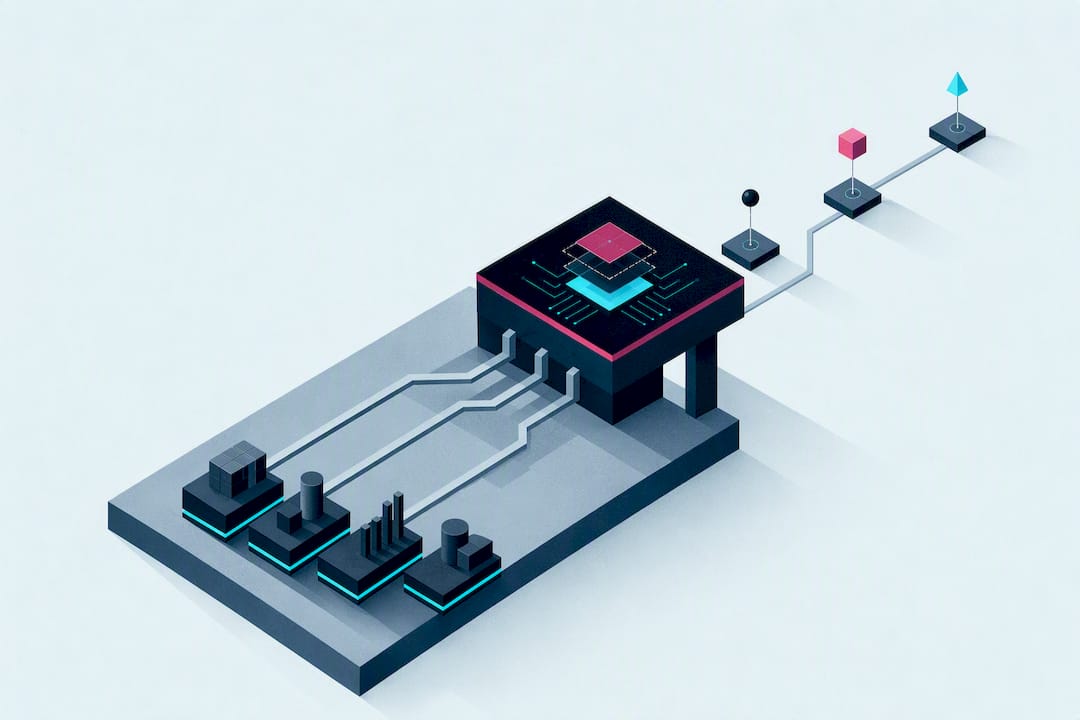
A production operating system is a plant-level layer that consolidates machine, PLC, SCADA, MES, and ERP data into an auditable decision model for operators and managers. It does not replace ERP or MES — it works above them. So far, so brochure. Here's the part the brochures skip: this category has already been tried, loudly, by the biggest names in industrial software — and their "operating systems" are dead or renamed. The reason they failed is the reason the next one you evaluate deserves hostile questions, not a demo slot. This article is those questions.
TL;DR:
- The industry has sold "industrial operating systems" before: GE's Predix was "the operating system for the Industrial Internet." It's gone. Siemens' MindSphere was "the open IoT operating system." It's been renamed. Both were cloud platforms — the least OS-like thing software can be.
- A real operating system runs where you decide, keeps working when the internet doesn't, and earns its permissions gradually. Judge every "production OS" against those three properties.
- The value is not the platform, it's the memory: machine-specific behavior learned from your own history, with evidence attached to every recommendation and a signed approval before anything changes on the floor.
- Demand proof before installation: a data-led assessment on records you already have should surface real findings — bottlenecks, machine signatures, hidden capacity — before you commit to anything.
- Start narrow, shadow first, measure against a baseline, and expand autonomy only as fast as the evidence supports.
Table of Contents
- What Is a Manufacturing Operating System, Architecturally?
- Three Claims the Market Makes — and Where Each One Breaks
- What an Operating System Actually Owes You
- POS vs. ERP vs. MES vs. MOM: Who Owns What?
- What Benefits Should You Actually Expect?
- How Atherya Applies These Principles in Practice
- The Questions to Ask Any "Production OS" Vendor
- Your Implementation Checklist: From Assessment to Pilot to Rollout
- What I'd Tell a Plant Manager Before They Sign Anything
- Ready to See What Your Own Floor Data Is Hiding?
- Sources
- FAQ
What Is a Manufacturing Operating System, Architecturally?
Take the phrase "operating system" seriously for a moment — more seriously than the vendors who coined it did. An operating system, the real kind, does a handful of specific jobs: it abstracts heterogeneous hardware behind drivers, it schedules scarce resources among competing demands, it manages memory, it enforces permissions, and it runs on a machine you own. Researchers behind the FabOS project describe a factory OS the same way: an open, distributed, secure coordinating layer — a meta-kernel for AI and data-driven services — not a replacement for the controllers underneath it.
Map that onto a plant and the architecture writes itself:
- Drivers — edge connectors that read PLCs, SCADA historians, MES work orders, ERP transactions, WMS movements, and CMMS tickets without disrupting their logic.
- Memory — a learned model of how your machines actually behave: per-machine, per-recipe, built from your own history, not from a fleet average.
- Scheduler — planning that allocates machine-hours to orders based on real, measured capacity, the way an OS allocates CPU to processes.
- Permissions — every automated suggestion carries evidence and requires a signed human approval before anything changes; autonomy expands in audited steps, never by default.
One more OS property matters and gets ignored: longevity on hardware you control. Enterprise-grade industrial Linux platforms offer 10 to 15 years of lifecycle support because plants replace hardware slowly, and enterprise Linux for distributed intelligence is built around that patch cadence. A production OS has to survive PLC firmware updates and an ERP migration without breaking. Now ask the obvious question: can a system make that promise if it only exists in a vendor's cloud, on the vendor's release schedule, at the vendor's pleasure? Keep that question. You'll need it.
Three Claims the Market Makes — and Where Each One Breaks
Claim one: "This is the operating system for industry." It has been said before, by companies with more engineers than most plants have employees. GE marketed Predix as the operating system for the Industrial Internet; the platform was sold off and faded. Siemens sold MindSphere as the open IoT operating system; it has since been renamed and repositioned. The pattern in both failures is identical: they used "operating system" as a metaphor while building the opposite of one — a subscription platform in someone else's cloud, where your plant's intelligence lived on their servers, evolved on their roadmap, and stopped at their discretion. An operating system that stops working when the internet does is not an operating system. It's a tenancy.
Claim two: "Connect everything, and value appears." Connectivity is the demo; it is not the product. A layer that reads every system and remembers nothing is another dashboard — the plant's tenth screen, showing the same events with better fonts. The value of a plant-level layer is the part the integration diagram can't show: whether it learns — whether machine number seven's normal is different from machine eight's, whether this recipe runs differently on this press, whether last February's drift looked exactly like this one. Integration without memory is plumbing.
Claim three: "Trust the AI recommendations." On whose evidence? A score with no provenance is an opinion with a user interface, and operators treat it accordingly: they ignore it the first time it's wrong, and they're right to. Worse, generic thresholds — the same alarm limits for every machine in the family — manufacture the false positives that train a whole shift to click dismiss. A recommendation you can't audit is an alarm you'll learn to ignore.
THE MARKET SELLS AN "OPERATING SYSTEM" THAT IS A PLATFORM IN SOMEONE ELSE'S CLOUD. A REAL ONE RUNS WHERE YOU DECIDE — AND EARNS ITS PERMISSIONS ON YOUR FLOOR.

What an Operating System Actually Owes You
Hold every candidate to the properties the word implies. This is the standard:
- It runs where you decide. On-premise on a machine inside your plant, in your own cloud tenancy, or hybrid — deployment is your choice, not the vendor's business model. The failed "industrial OSes" offered exactly one option: theirs.
- It works with the internet down. Offline-first is not a feature checkbox; it's the difference between an operating system and a web service with industrial wallpaper.
- It learns machine-specific behavior. Anomaly detection against each machine's own history, per recipe — because that's what removes false alarms instead of adding them.
- Every number carries its evidence. Which signal, which historical baseline, which comparable event. Explainability isn't a premium tier; it's the admission ticket.
- Permissions are earned, logged, and revocable. Recommendations first. Signed approvals on every change. Autonomy that expands only where the track record supports it — and contracts when it doesn't.
- It coexists with your systems of record. ERP keeps transactions, MES keeps execution. The OS reads them and decides across them; it doesn't ransom them.
Vendors will pitch AI as the headline. The audit trail, the offline posture, and the deployment freedom underneath it matter more — because a brilliant prediction nobody can verify, from a platform that can be switched off remotely, is worth exactly what Predix customers' models are worth today.
POS vs. ERP vs. MES vs. MOM: Who Owns What?
| Layer | Owns | Time horizon | What it can't do alone |
|---|---|---|---|
| ERP | Transactions, purchasing, financials, demand | Weeks to months | See the floor as it actually runs |
| MES / MOM | Work orders, routing, execution tracking | Minutes to shifts | Learn machine behavior, plan across silos |
| SCADA / PLC | Real-time control, alarms, historians | Seconds | Turn raw signals into decisions |
| Production OS | Cross-system memory and decisions | Minutes to weeks | Replace any of the above — by design |
Three coexistence patterns work in practice: augment (the OS reads ERP and MES without touching their workflows), read-only first (prove value before any write-back permission exists), and phased replacement (only for fragmented legacy stacks where consolidation beats maintenance). Data ownership stays with each system of record. Decision authority belongs where the accountable human sits — and a serious platform writes that principle into its architecture as signed approvals, not into a slide.
What Benefits Should You Actually Expect?
Only benefits you can number. Four places to look, and how to keep the vendor honest about each:
- OEE from fewer unplanned stops — machine-specific drift detection catches deviation before it's a fault. Demand to see one real detection with its evidence, not an aggregate claim.
- Shorter MTTR — an alert that arrives with the sensor readings, the machine's own baseline, and a likely cause turns guessing into diagnosing.
- First-pass yield — quality tied to shift, machine, and condition surfaces what the weekly spreadsheet buries.
- Schedule adherence — plans built on measured capacity instead of nameplate capacity survive contact with the floor. Manual scheduling assumptions ("line 3 runs at 85%") are folklore until the data confirms them — and it usually doesn't.
A typical pilot on one line surfaces a recurring machine signature within the first weeks — a vibration pattern or temperature drift operators had learned to work around. That's the fastest visible win: a "known issue" becomes a scheduled fix instead of a recurring surprise. Any improvement percentage quoted before your data has been read, however, is a scenario at best and a sales projection at worst — a serious vendor will label it as such. If they won't, that tells you more than the number does.
Pro Tip: Pick one line with reliable historical data for the first measurement window. A messy pilot on your worst-instrumented line makes every platform look weaker than it is.

How Atherya Applies These Principles in Practice
Atherya was built to be judged by exactly the standard above — because we wrote this standard by building against it.
Where it runs: on-premise by default — the full brain on a small machine inside your plant, offline-first, data never leaving your perimeter — with an optional cloud control plane when you want one. Hybrid is a choice, not a requirement. It keeps working with the internet down, because an operating system that doesn't isn't one.
What it learns, from real evidence: in one onboarding at a rubber-moulding plant in northern Italy, Atherya read six years of raw history — six million readings across 42 machines and five product families — before any hardware decision. It learned 141 machine × recipe signatures: not "presses like this usually behave like that," but this press, on this compound, at this ambient condition. From that history alone, 98 open operational questions were reduced to 7 — before installation, from data the plant already owned. Those are measured figures from one real plant; improvement projections beyond them are scenarios, and we declare them as scenarios.
How it decides: capacity estimated per machine and per recipe from what was actually produced, scheduling proposed on those real numbers, maintenance windows planned inside the production plan instead of against it. Every proposal appears on a live board with its evidence attached — source data, uncertainty, comparable events — and requires a signed human approval. Autonomy is graduated: the system earns each level on lower-stakes decisions, the approval trail is permanent, and a human pin on any decision is respected even when the brain disagrees.
What it coexists with: SAP, Oracle, Infor, Dynamics on the ERP side; existing MES, WMS, CMMS, SCADA and PLC data on the floor side — read first, write back only through governed, ratified decisions. No rip-and-replace, no new sensors to start.
The Questions to Ask Any "Production OS" Vendor
Bring this list to every demo, including ours.
- Where does it run when the internet is down? If the honest answer is "it doesn't," the word "operating system" on the brochure is decoration.
- Show me the evidence behind one recommendation. The signal, the baseline, the comparable event — live, not a screenshot. A vendor that can't trace one number has no provenance layer, just confidence.
- What happens to my plant's model if you sunset the platform? Ask them to answer with a straight face. Then ask a former Predix customer.
- Who approves an automated action, and where's the trail? If autonomy isn't graduated, logged, and revocable, you're not buying intelligence — you're buying liability.
- The same-export test. Give every vendor on your shortlist the same export of your historical data and ask for the same three things: the real bottleneck, one machine behaving unlike its twin, and the evidence behind both. A vendor that needs an installation window before answering is telling you its model doesn't know your plant. A vendor that answers with a number and no provenance is telling you the same thing, more politely.
Your Implementation Checklist: From Assessment to Pilot to Rollout
Skipping the assessment step is the single most common reason pilots underdeliver. The sequence that works:
- Start with a data-led factory assessment. Feed in existing historical records — machine logs, quality data, maintenance tickets, shift schedules. Expect named findings: bottlenecks, hidden capacity, shift-level effects. If the assessment finds nothing, you've learned something valuable about the vendor at zero installation cost.
- Scope one workflow for the pilot. One line, one clear KPI target, one accountable owner.
- Connect data sources and run in shadow. The pilot mirrors existing decisions without changing anything, while you capture a baseline. Supervisors compare its calls against their own — that builds a track record before anyone's job depends on it.
- Set governance before day one. Who in IT and who in operations approves what; every recommendation with a visible audit trail. This is also where operator trust is won or lost: show senior operators the evidence behind each call, not just the call.
- Track hard KPIs against the baseline. Cycle time, downtime, MTTR, yield.
- Hold the pilot to 6–12 weeks. Enough to measure movement, short enough to prevent scope creep.
The most common integration risk isn't the AI model — it's data quality: mismatched clocks between systems, inconsistent schemas, sensor gaps that silently corrupt a baseline.
Pro Tip: Before you connect a single data source, reconcile clock sync across PLC, MES, and ERP. A 90-second timestamp mismatch can make a perfectly good model look wrong for weeks.
What I'd Tell a Plant Manager Before They Sign Anything
The category is real; most of what wears its name is not. Hold every vendor to the three OS properties — runs where you decide, works offline, earns its permissions — and make them prove value on your own export before a single sensor is discussed. Start narrow, shadow first, measure honestly, and let autonomy expand only as fast as the evidence supports. The vendors who died selling "industrial operating systems" all had one thing in common: their system needed you to believe. Yours should only need you to verify.
— Atherya
Ready to See What Your Own Floor Data Is Hiding?
The most useful first step isn't a feature demo — it's a data-led factory assessment on records you already have. It identifies your hidden capacity and recurring machine signatures before you commit to anything, with evidence attached to every finding. If scheduling and materials coordination are the bigger pain, the Production Planning Plug-in stands on its own. Either way: don't take our word for any of this. Send the export, and let your own six years of history do the talking.
Sources
- Moxa — Industrial Linux lifecycle and support
- ResearchGate — Meta-operating system concept for factories
- Eclipse Foundation — FabOS project overview
- Wind River — eLxr Pro enterprise Linux for distributed intelligence
FAQ
What Is a Production Operating System?
A production operating system is a plant-level orchestration layer that unifies machine, PLC, SCADA, MES, and ERP data into one auditable decision model — a coordinating meta-kernel for AI and data-driven services, in the FabOS project's terms. The word "operating system" is earned, not decorative: it should run where you decide, keep working offline, and enforce permissions on every automated decision. Platforms that carried the name without those properties — Predix, MindSphere — are gone or renamed.
What Are the Four Main Types of Production Systems?
Manufacturing operations are generally grouped into job shop, batch, repetitive, and continuous production systems, defined by volume and variety of output. A production operating system layers on top of any of them, since it orchestrates data and decisions rather than dictating a production method.
How Is a Production Operating System Different From an MES?
MES manages execution: work orders, routing, real-time tracking. A production operating system sits above MES, ERP, and SCADA, combining their data into machine-specific behavior models and coordinated decisions none of those systems generate alone. It reads from your MES; it doesn't replace it.
How Long Does a Typical Pilot Take?
Six to twelve weeks — enough to establish a baseline and measure real KPI movement without scope creep. The stronger move is what comes before the pilot: a data-led assessment on historical records, which should produce named findings before any installation. Atherya's reference onboarding closed 91 of 98 open operational questions from six years of existing data alone, before hardware was discussed.
Does a Production Operating System Replace My ERP or MES?
No. It coexists with ERP and MES systems like SAP, Oracle, Infor, or Dynamics, reading their data to add plant-level intelligence, and writing back only through governed, approved decisions. Full replacement is occasionally worthwhile for fragmented legacy stacks, but augmentation is the standard, lower-risk path.
What Does Atherya Cost?
Atherya does not publish standard pricing; current details are available directly on its website. Engagements begin with a data-led factory assessment on your existing records — so the first thing you receive is evidence about your own plant, not a subscription commitment.
Recommended
WHERE ATHERYA STANDS ON THIS
The problem on a shop floor is almost never a missing system. It is missing context.
Every plant we walk into already owns more data than it uses: years of machine history, orders, shifts, work orders, maintenance notes. What is missing is not another tool on top of the stack — it is a system that knows this plant. Which machine has run slightly hot since the day it was installed. Which deviation is normal on the night shift. Which alarm the team stopped reading two years ago, and why they were right to stop.
That is the difference between a model that scores signals and a system that has an operational memory. A generic threshold produces a false alarm every day on a machine born with a factory defect. Atherya learns each machine's own normal band first, so only movement beyond its band becomes an alert. Silence is a feature: the alarms that survive are the ones worth waking someone up for.
And an alert that stops at "anomaly detected" moves nothing. Atherya reasons on top of its memory: when this already happened, how similar it was, how it evolved, which action worked, which failure mode the FMEA connects it to. Then it does the part most tools leave to a spreadsheet — it proposes the maintenance window against real orders and real shifts, and replans when something changes. Nothing is ever applied on its own: every action waits for a person to sign it off, and every step leaves a signed, auditable trail.
That is the whole bet. Not one more dashboard to reconcile, not autonomy sold as a switch, but one brain that reads the data you already have — OPC-UA, SQL, MES, ERP, WMS, CMMS — before a single new sensor is installed, explains itself in the open, and gives the decision back to the people who run the plant.
What makes Atherya different
Most predictive maintenance tools score signals. Atherya builds an operational memory of the plant first, then reasons on top of it — with the evidence in plain sight and the decision left to a person.
Operational memory
Every event, anomaly, intervention and shift becomes shared memory. What was a log yesterday is experience tomorrow, and the model reads new signals against it.
Déjà Vu: it has seen this before
Not just "anomaly detected", but when it already happened, how similar it was, how it evolved and which action worked. The senior maintainer's memory, available to everyone.
Context that kills false alarms
Machine defects, weak points, how the crew actually works and the environment around the line. A deviation that is normal for that machine, that shift or that season stays quiet.
Living FMEA
FMEA, manuals and procedures become an active part of the reasoning: causes, effects, sensors and suggested actions are connected, instead of sitting in a document nobody opens.
Explainable, not magic
Every alert arrives with the signals involved, the comparable history, the failure mode and a confidence level. Data, interpretation and decision stay separate and verifiable.
It acts, with your sign-off
Atherya does not stop at the warning: it proposes the maintenance window against real orders and shifts, and replans when something changes. Nothing is applied until a person approves it.
On the data you already have
It works on PLC, SCADA, MES, ERP, maintenance records and feedback as they are — fragmented and legacy included. Sensors are added only where no existing signal carries the degradation.
One brain, not a maintenance silo
Maintenance, production and planning read the same operational state, so a predicted failure immediately becomes a scheduling question instead of a separate dashboard.